
 Cart is empty
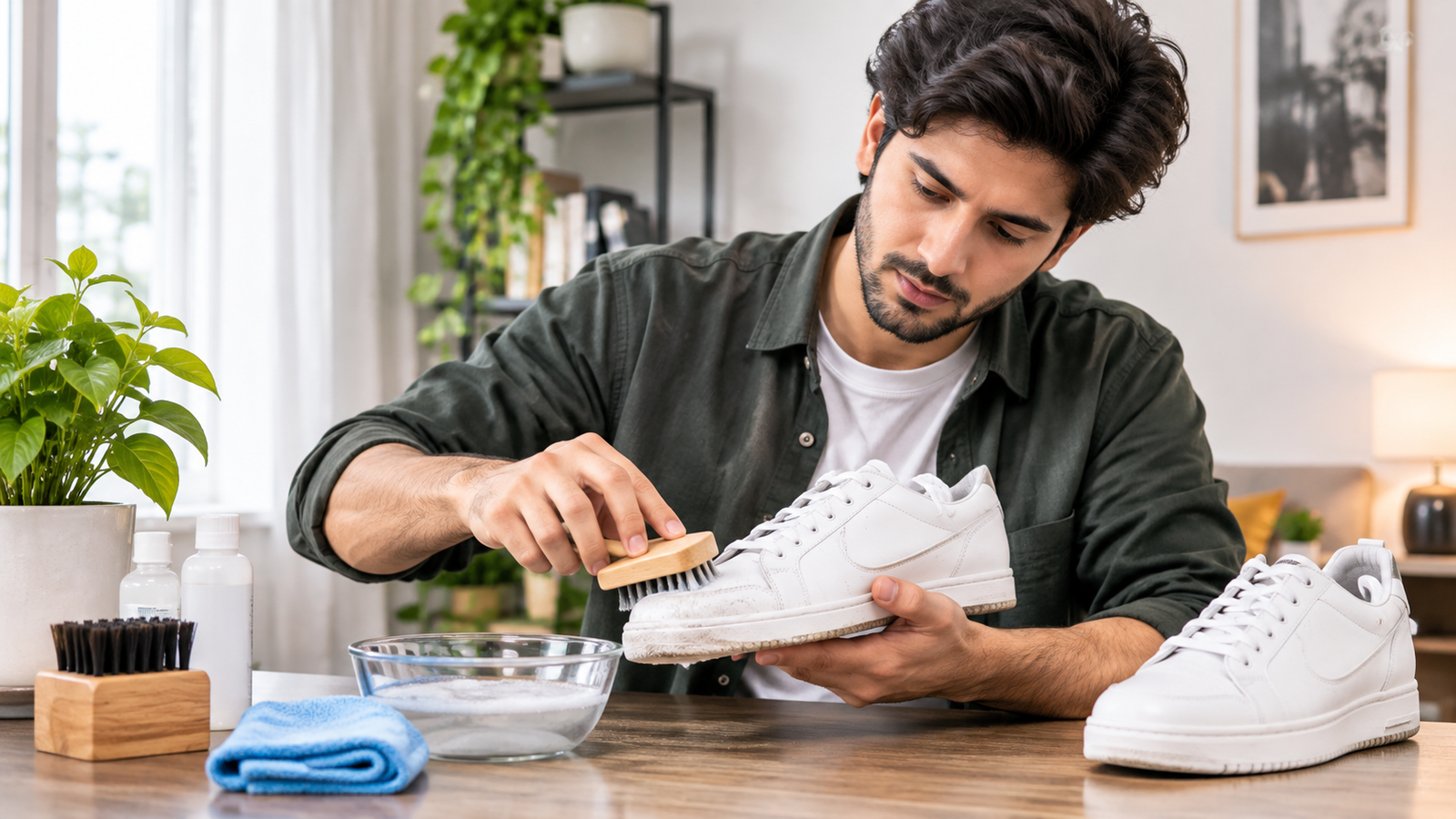
To clean white sneakers, remove loose dirt with a soft brush, then gently scrub the surface using mild soap and lukewarm water. Match your cleaning method to the shoe material, wipe away soap residue, and let the sneakers air-dry naturally. Regular spot cleaning helps prevent stubborn stains and keeps white shoes looking fresh.
White sneakers look great with almost any outfit. However, they quickly collect dust, mud, scuff marks, and everyday stains.
Even a small dirty patch can make a clean outfit look untidy. Fortunately, you don’t need expensive products or professional cleaning services for everyday maintenance.
With the right supplies and a little patience, you can restore much of your sneakers’ original appearance at home.
In this guide, I’ll explain how to clean white sneakers safely, remove common stains, prevent yellowing, and maintain different shoe materials.
Why Do White Sneakers Get Dirty So Quickly?
White footwear shows dirt more clearly than darker shoes. Everyday activities expose sneakers to several types of stains.
Here are the most common causes:
- Road dust: Fine dust settles into fabric and surface textures.
- Mud: Wet soil leaves visible marks after drying.
- Scuff marks: Contact with other shoes, furniture, and hard surfaces creates dark lines.
- Sweat: Moisture and everyday wear can contribute to unpleasant smells.
- Improper storage: Dust, humidity, and prolonged sunlight can affect the appearance of footwear.
The biggest mistake is waiting until dirt becomes difficult to remove.
A quick clean after a dirty walk often saves more time than a major cleaning session later.
What Do You Need to Clean White Sneakers?
You probably already have most of these supplies at home.
Gather the following items before starting:
| Cleaning supply | Purpose |
|---|---|
| Soft-bristle brush | Removes loose dirt |
| Microfiber cloth | Wipes away dirt and soap |
| Mild laundry detergent | Helps remove everyday stains |
| Lukewarm water | Creates a gentle cleaning solution |
| Small bowl | Holds the cleaning mixture |
| Old toothbrush | Reaches seams and difficult areas |
| White paper towels | Helps absorb moisture during drying |
You don’t need every specialised cleaning product available online.
I prefer starting with a simple, gentle cleaning solution. Strong chemicals often create more problems than they solve.
How to Clean White Sneakers Step by Step
Follow these steps for most everyday canvas, fabric, and suitable synthetic sneakers. Always check the manufacturer’s instructions first.
Step 1: Remove the Laces and Insoles
Take out the shoelaces before cleaning.
This gives you better access to the tongue, eyelets, and areas underneath the laces.
Remove the insoles if the manufacturer allows it. Clean them separately according to their material and care instructions.
Step 2: Remove Loose Dirt
Use a dry, soft-bristle brush to remove dust and loose dirt.
Pay attention to the following areas:
- Around the toe box.
- Along the sides.
- Near the stitching.
- Around the sole edges.
Avoid wetting the sneakers immediately. Loose dirt can turn into muddy residue when mixed with water.
Step 3: Prepare a Gentle Cleaning Solution
Mix a small amount of mild laundry detergent with lukewarm water.
You only need enough solution to clean the affected areas.
Avoid using concentrated detergent because it can leave residue or affect certain materials.
Before cleaning the entire sneaker, test the solution on a small, hidden area.
Step 4: Gently Scrub the Surface
Dip your soft brush into the cleaning solution.
Gently scrub the dirty areas using small circular movements.
Work section by section rather than soaking the entire shoe.
For difficult marks around stitching and narrow edges, use an old toothbrush.
Don’t apply excessive pressure. Aggressive scrubbing can damage delicate fabric, loosen surface finishes, or affect stitching.
Step 5: Clean the Soles Separately
The rubber soles often collect more stubborn dirt than the upper material.
Use a separate brush to clean the rubber edges and outsole.
A slightly damp cleaning cloth can help remove remaining soap.
Keep the cleaning solution away from delicate upper materials whenever possible.
Step 6: Remove Soap Residue
Take a clean microfiber cloth and dampen it with fresh water.
Carefully wipe the cleaned areas to remove detergent residue.
Don’t leave visible soap behind. Residue can attract dirt and affect the final appearance.
Step 7: Air-Dry Your Sneakers
Gently remove excess moisture using a clean towel.
Place white paper towels inside the shoes to help maintain their shape and absorb moisture.
Leave the sneakers in a well-ventilated area at room temperature.
Avoid direct heat, radiators, and tumble dryers unless the manufacturer specifically approves the method.
Allow the shoes to dry completely before wearing them again.
How Should You Clean Different Types of White Sneakers?
Not every white sneaker uses the same material.
This is where many people make mistakes. A cleaning method that works for canvas may damage suede or natural leather.
How to Clean White Canvas Sneakers
Canvas sneakers can usually handle gentle surface cleaning.
Use a soft brush, diluted detergent, and a damp cloth.
Work gently around dirty areas. Avoid excessive water because soaking can affect the shoe’s structure and adhesive.
Let canvas shoes dry naturally.
How to Clean White Leather Sneakers
Leather needs more careful handling.
Use a soft, slightly damp microfiber cloth and a cleaner suitable for leather.
Wipe the surface gently instead of soaking it.
Avoid aggressive scrubbing, bleach, and strong household chemicals. Once the shoes dry, use an appropriate leather conditioner if the manufacturer recommends one.
How to Clean White Mesh Sneakers
Mesh materials have small openings that collect dust and dirt.
Use a soft brush and a small amount of diluted cleaning solution.
Work gently across the surface. A hard brush can damage delicate fibres.
Remove excess moisture with a microfiber cloth.
How to Clean White Suede Sneakers
Suede requires a different approach.
Never treat suede like ordinary canvas.
Start with a dedicated suede brush to remove dry dirt. For stubborn marks, use a suede eraser or a suitable suede cleaner.
Avoid soaking suede in water. Always follow the product manufacturer’s care instructions.
How to Remove Common Stains From White Sneakers
Different stains need different approaches. Before applying any cleaning product, test it on a hidden area.
How to Remove Mud Stains
Allow wet mud to dry first.
Brush away the dried dirt using a soft brush. Then clean the remaining marks with a suitable mild cleaning solution.
Trying to scrub wet mud can spread the stain across a larger area.
How to Remove Scuff Marks
For suitable rubber soles, use a damp microfiber cloth or a footwear cleaning sponge.
A cleaning sponge can help with stubborn rubber marks. However, test it first because abrasive surfaces can damage leather, fabric, and protective finishes.
How to Remove Yellow Stains
Yellowing can happen for several reasons, including ageing, oxidation, detergent residue, and environmental exposure.
Start with a gentle clean and remove any remaining soap.
If the yellowing remains, consider a material-specific footwear cleaner.
Keep in mind that permanent discolouration may not disappear completely. Avoid applying bleach or strong whitening chemicals without manufacturer approval.
How to Remove Bad Smells
Unpleasant smells often develop when moisture remains inside footwear.
Remove the insoles if permitted and let everything dry separately.
You can also use a footwear deodoriser designed for the material.
Never wear damp sneakers for long periods. Allowing them to dry completely helps maintain freshness.
Five Mistakes That Can Damage White Sneakers
Keeping white sneakers clean isn’t just about removing stains. You also need to protect their material and structure.
Avoid these common mistakes:
1. Using too much bleach
Bleach can damage certain materials, affect adhesives, and cause discolouration. It isn’t a universal whitening solution.
2. Putting every sneaker in the washing machine
Machine washing can damage leather, delicate fabrics, and adhesives. The American Cleaning Institute recommends checking manufacturer instructions before machine washing.
3. Using hard brushes on delicate materials
Aggressive scrubbing can damage mesh, suede, and surface finishes.
4. Drying sneakers in direct sunlight
Excessive heat and prolonged sunlight can affect materials and colour. Choose a ventilated area instead.
5. Storing sneakers while they’re still damp
Trapped moisture can contribute to unpleasant smells and other material problems.
These mistakes are easy to avoid once you understand your footwear’s material.
My White Sneaker Maintenance Checklist
I recommend following a simple maintenance routine instead of waiting for sneakers to become heavily stained.
Here’s a practical checklist:
| Maintenance task | Suggested routine |
|---|---|
| Remove loose dust | After wearing when needed |
| Wipe visible marks | As soon as possible |
| Clean dirty soles | When noticeable |
| Wash laces | When visibly dirty |
| Check and air-dry insoles | Regularly |
| Deep clean | When the material needs it |
| Store in a dry place | After every use |
These are practical maintenance suggestions, not fixed manufacturer cleaning intervals. Adjust them according to how often you wear your shoes.
My Practical Rule: Match the Cleaning Method to the Material
I would never recommend one cleaning mixture for every sneaker.
Instead, use this simple decision checklist:
- Canvas: Gentle detergent and a soft brush.
- Leather: A suitable leather cleaner and a soft cloth.
- Mesh: Minimal moisture and gentle brushing.
- Suede: Dry brushing and dedicated suede products.
- Rubber soles: A separate brush and suitable cleaning solution.
This small distinction can prevent unnecessary damage and help your sneakers last longer.
[INSERT: A real client detail, number, or story here. Add Aoun’s genuine experience with footwear retailers, e-commerce products, or a relevant project. Remove this placeholder before publishing.]
How Can Footwear Businesses Build a Better Online Shopping Experience?
Clean footwear is only one part of running a successful shoe business.
If you sell sneakers or other footwear, customers also need clear product information, professional photographs, easy navigation, and a smooth checkout experience.
A poorly organised online store can make even good products difficult to discover.
That’s why choosing the right website platform matters.
For example, WooCommerce gives footwear retailers flexibility to organise product categories, manage inventory, display product variations, and integrate payment systems.
If you’re planning to launch or improve a footwear store, explore my WooCommerce development services.
You can also use my free website cost calculator to estimate your website or e-commerce project budget before getting started.
I also work with Wix Velo, Flutter, Firebase, and AI integrations for businesses that need more specialised digital solutions.
The right solution depends on your business requirements, customers, and future plans.
Frequently Asked Questions About Cleaning White Sneakers
1. What is the easiest way to clean white sneakers?
The easiest way to clean white sneakers is to remove loose dirt with a soft brush, then gently wipe the surface using diluted mild detergent and lukewarm water. Finish with a clean damp cloth and allow the shoes to air-dry.
2. Can I use baking soda to clean white sneakers?
Baking soda can help with certain stains on suitable materials when used carefully. However, it can act as an abrasive. Test a small hidden area first and avoid using it on delicate leather or suede without manufacturer approval.
3. Can I put white sneakers in the washing machine?
Not all white sneakers can go in a washing machine. Many manufacturers discourage machine washing because agitation, water, and detergents can damage adhesives and materials. Check the shoe’s care label before washing.
4. How do I stop white sneakers from turning yellow?
Clean away dirt and detergent residue, avoid unsuitable chemicals, and dry your sneakers away from excessive heat and direct sunlight. Store them in a cool, dry, ventilated place.
5. How often should I clean white sneakers?
Clean visible dirt as soon as practical and give your sneakers a deeper clean whenever they need it. The ideal frequency depends on how often you wear them and the surfaces you walk on.
6. How can I make old white sneakers look fresh again?
Start by removing loose dirt and cleaning the material with a suitable footwear cleaner. Clean the soles separately and replace badly stained laces if necessary. However, permanent yellowing, damaged finishes, and worn materials may not return to their original condition.
Final Thoughts
White sneakers don’t need complicated cleaning routines to stay presentable.
The key is to remove dirt early, choose suitable cleaning products, and avoid methods that damage the material.
Whether you wear white sneakers every day or save them for special occasions, a little regular care can make a noticeable difference.
Start with gentle cleaning, allow enough drying time, and store your footwear properly.
Need help building a professional online store for your footwear business?
If you’re planning an e-commerce website, custom business platform, or mobile application, feel free to contact me on WhatsApp.
I’ll be happy to discuss your requirements and help you explore the right solution.
Leave A Comment